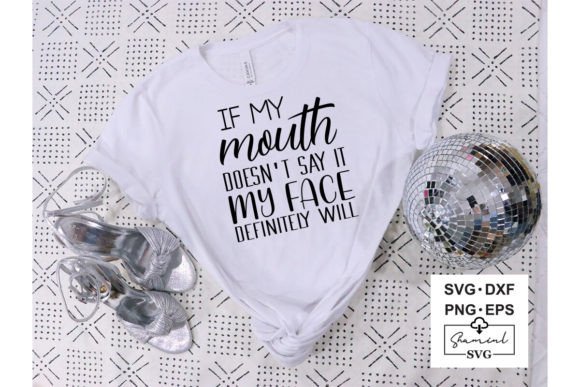
If My Mouth Doesn't Say It My Face Definitely Will
Few phrases capture the tension between what we think and what we show as directly as If My Mouth Doesn't Say It My Face Definitely Will. It is a statement that has moved from casual conversation into the world of design, branding, and personal expression. For creators, small business owners, and anyone who works with digital assets, this phrase now comes as a ready-to-use SVG design set that fits into a surprisingly wide range of practical workflows.
What the Design Set Includes and Why It Matters for Your Workflow
When you purchase this digital download, you receive a zip folder containing four files: one SVG, one DXF, one EPS, and one PNG at 300 DPI with a transparent background. The file is delivered instantly, and no physical product is shipped. The quality is consistent, and the transparent background means you can place the design on any surface or background without extra editing work.
Having multiple file formats matters because different tools and platforms accept different file types. SVG and EPS are vector formats, meaning they scale cleanly from a small sticker to a large poster without losing sharpness. DXF is useful for cutting machines like Cricut or Silhouette. The high-resolution PNG with transparency works immediately for digital mockups, social media graphics, or print-on-demand uploads. You do not need to convert, trace, or re-export the design before using it in most common workflows.
Where the Design Fits in a Broader Creative or Business Process
This kind of design asset fits naturally into several stages of a project. Understanding where it belongs in your process helps you avoid wasted time and ensures you use it effectively.
Before a Project: Preparation and Planning
If you are planning a product line, a collection of apparel, or a set of promotional items, having a strong design ready to go speeds up the early stages. Instead of commissioning custom artwork or spending hours in vector software, you can drop this design into your project folder and begin testing placements, colors, and sizes immediately. The phrase itself has broad appeal, especially for audiences who appreciate humor, sarcasm, or honest self-expression. Knowing your target demographic and how they respond to this tone helps you decide whether to use the design as a standalone piece or as part of a larger series.
During the planning phase, consider what medium you want to use. If you are creating merchandise for a small online shop, the PNG file lets you upload directly to print-on-demand platforms without additional preparation. If you plan to cut vinyl for a mug or a t-shirt, the SVG or DXF file is ready for your cutting machine software. Preparation becomes a matter of selecting the right file, not editing the design itself.
During a Project: Implementation and Production
Once you move into production, the design set works across multiple tools and platforms. For example, if you are using a Cricut or Silhouette machine, you import the DXF or SVG file directly into the design software. The clean lines and solid shapes mean the machine cuts accurately with minimal weeding. If you are working in Adobe Illustrator, Inkscape, or Affinity Designer, the SVG or EPS file opens as a fully editable vector. You can change colors, scale the design, or combine it with other elements.
For digital creators, the transparent PNG is useful for social media templates, email headers, or website graphics. You can layer it over photos, patterns, or solid backgrounds without needing to mask or erase anything. The 300 DPI resolution ensures the text remains crisp even if you enlarge it for a banner or a poster.
One practical observation: because the design is text-based with a clear message, it works well in both large and small formats. On a small sticker or a phone case, the phrase remains readable. On a tote bag or a hoodie, it becomes a statement piece. This versatility means you can use the same file for multiple product types without redesigning anything.
After a Project: Quality Control and Long-Term Use
After production, the design file remains reusable. Because it is a digital download, you can store it in your asset library and pull it out for future runs, seasonal promotions, or new product categories. The vector formats do not degrade over time, and the PNG maintains its quality as long as you store it properly. This is useful for small business owners who want to maintain consistency across multiple product drops or for creators who sell designs on multiple platforms.
Quality control is straightforward. Because the design is pre-made and tested for clean lines, you spend less time troubleshooting cuts, prints, or uploads. If you do encounter issues, they are usually related to the material or the machine settings, not the design file itself. This separation of concerns makes your production process more predictable.
Practical Implementation Tips for Different Workflows
How you integrate this design into your routine depends on your specific tools and goals. Below are several workflow examples that reflect common scenarios.
Print-on-Demand Sellers
- Upload the transparent PNG to platforms like Printful, Printify, or Redbubble. Because the background is already removed, you skip the step of manually erasing backgrounds in Photoshop or GIMP.
- Use the SVG file if the platform accepts vector uploads. This ensures the highest quality at any print size.
- Create multiple color variants by opening the SVG in a vector editor, changing the fill color, and saving new versions. Store each variant with a clear naming convention, such as face-white.svg or face-black.svg.
Vinyl Cutting for Physical Products
- Import the DXF file into Cricut Design Space or Silhouette Studio. The design should appear as a single cut path with no extra nodes or broken lines.
- Before cutting, check the size relative to your material. The scalable nature of vector files means you can adjust dimensions without quality loss.
- For multi-color applications, duplicate the design in your software, change the color of each layer, and assign separate cut actions. This works well for layered vinyl projects on mugs, tumblers, or signs.
Digital Content Creators and Social Media Managers
- Use the PNG file as an overlay on Instagram posts, TikTok videos, or YouTube thumbnails. The transparent background lets the design sit naturally on top of your content.
- Pair the design with a complementary font or graphic element. Because the phrase is conversational, it pairs well with clean sans-serif fonts or handwritten styles for contrast.
- Schedule posts that feature the design ahead of time using a content calendar. Treat the design as a recurring asset that you can pull into different seasonal or thematic posts.
Small Business Owners and Brand Builders
- Incorporate the design into branded merchandise for giveaways, customer gifts, or team wear. The universal nature of the phrase means it appeals to a wide audience without being tied to a specific industry.
- Keep the design file in a shared asset folder that your team can access. Use a consistent file naming system, for example face-svg, face-png, face-dxf, so anyone can find and use the correct format quickly.
- Document your file formats and their recommended uses in a simple internal guide. This reduces back-and-forth questions and ensures consistency across projects.
How This Design Interacts with Other Tools, Resources, and Methods
No design exists in isolation. The usefulness of If My Mouth Doesn't Say It My Face Definitely Will depends on how well it integrates with your existing tools and processes.
Compatibility with Design Software
The SVG and EPS formats are widely supported across major vector editors. Adobe Illustrator, CorelDRAW, Inkscape, Affinity Designer, and Gravit Designer all open these files without conversion issues. If you use a web-based design tool like Canva, the PNG format is the easiest to import, though some plans also support SVG uploads. Check your software's file compatibility before downloading to avoid unnecessary format conversions.
Compatibility with Cutting Machines
DXF files are a standard format for cutting machines, but each machine software handles imports slightly differently. In Cricut Design Space, you can upload the DXF directly. In Silhouette Studio, you may need to adjust the import settings to preserve the design scale. Test a small cut on scrap material before committing to a full production run.
Integration with Inventory and Production Systems
For businesses that manage multiple products, store the design files in a centralized digital asset management (DAM) system or a simple folder structure organized by design name and format. This approach saves time when you need to reorder products or expand into new categories. If you use inventory software that tracks product variants, link each variant to the correct file name so you can regenerate assets quickly.
Working with Other Creatives or Contractors
If you outsource production, printing, or fulfillment, provide the correct file format upfront. Print shops typically prefer EPS or high-resolution PNG files. Vinyl cutters prefer DXF or SVG. Sending the wrong format leads to delays and potential miscommunication. Including a brief note about which file to use for which purpose keeps the process smooth.
Factors That Affect Long-Term Use and Consistency
Digital assets like this design set are durable, but how you manage them determines how useful they remain over months and years.
Organization: Save the zip folder in a location you can find later, and extract the files into a dedicated folder. Use a naming convention that includes the design name and the format, for example my-face-says-svg or my-face-says-png. Avoid generic names like "design1.svg" that become meaningless when you accumulate more assets.
Backup: Store a copy of the files in cloud storage or an external drive. Digital downloads are delivered once, so keeping a backup prevents loss if your computer fails or you accidentally delete the folder.
Version control: If you edit the design, save the edited version with a new name. Keep the original file unchanged. This way, you can always return to the baseline design if an edit does not work as expected.
Consistency across products: When using the design on multiple products, maintain the same color palette and placement guidelines. If you use the design on a t-shirt, a mug, and a sticker, customers recognize it as part of the same brand or collection. Consistency builds recognition and trust.
Final Observations on Using This Design in Real Workflows
The value of a digital design set lies not in the file itself but in how easily it fits into your existing process. If My Mouth Doesn't Say It My Face Definitely Will works because it requires minimal preparation, supports multiple output methods, and maintains quality across formats. Whether you are a hobbyist making a few items for personal use or a small business owner managing a product line, the design set reduces the gap between idea and finished product.
Take a few minutes after downloading to test each file format in your primary tools. Confirm that the SVG opens cleanly, the DXF cuts correctly, and the PNG displays with a true transparent background. Once you confirm compatibility, you can treat the design as a standard component in your workflow, ready to use whenever the right project comes along.
The phrase itself resonates because it is honest and relatable. The design set gives you a practical way to bring that sentiment into physical and digital spaces without spending hours creating it from scratch. Focus on the placement, the medium, and the audience, and let the file handle the rest.