Torn Paper Collage Background: Why Designers and Creatives Keep Coming Back to This Raw Aesthetic
There is something about a torn paper collage background that feels immediate. It is not polished. It is not pristine. And that is exactly why it works so well in a world where too much content looks airbrushed within an inch of its life. Whether you are a graphic designer staring at a blank canvas, a content creator assembling social media assets, or someone putting together a physical zine or poster, the torn paper collage background offers a texture that feels both nostalgic and urgent. It is the visual equivalent of a voice that has something to say and does not have time to wait for permission.
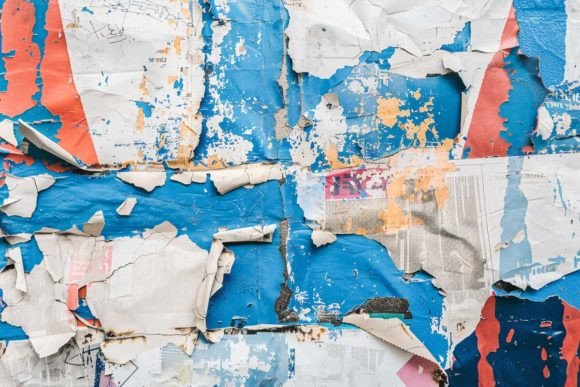
At its simplest, a torn paper collage background is a high-resolution image that simulates the look of ripped, creased, crumpled, and layered paper fragments. Think of a street pole plastered with posters that have been weathered by rain, sun, and the occasional passerby peeling off a corner. That layered, distressed, slightly chaotic look is exactly what this texture delivers. The specific file in question — a 5000 x 3333 pixel, 300 dpi JPG weighing around 5MB — offers enough resolution and detail to use in everything from large-format print projects to detailed digital compositions. But the real question is not what it is. The real question is what you can do with it.
The Street Art and Poster Designer Who Needs Grit, Not Gloss
If you design posters, flyers, or promotional materials for events that are meant to feel underground, raw, or community-driven, you already know that a clean gradient background kills the vibe. A torn paper collage background gives you that built-in sense of history. It suggests that your message has been around, that it has been fought for, that it is part of a larger conversation. You can drop your typography directly onto the texture and let the creases and crumpled areas break up the space naturally. You do not need to add artificial grunge filters. The texture is already there.
I have seen designers use these backgrounds for music festival lineups, independent film posters, and protest signage. The torn edges create a sense of urgency. They say, "This matters right now." And because the background already carries visual interest, you can keep your own design elements minimal. A bold headline, a single compelling image, and the paper does the rest of the work. That is efficiency. That is also why this particular texture, with its high resolution and 300 dpi, works for both digital previews and actual print runs. You can mock it up on screen and then send it to a risograph or offset printer without losing detail.
Social Media Content Creators Who Want to Stand Out in a Feed of Sameness
Scrolling through Instagram, TikTok, or Pinterest, you see the same flat lays, the same pastel gradients, the same clean product shots. A torn paper collage background cuts through that noise. For creators who post about art, poetry, activism, vintage fashion, or even book recommendations, this texture adds a tactile layer that digital-native content often lacks. It makes people stop. It makes them curious. They want to lean in and see what is written on that torn piece of paper.
The practical application here is straightforward: use the background as a canvas for quote cards, announcements, or series thumbnails. Because the file is large (5000 x 3333 pixels), you can crop it to different aspect ratios for Stories, Reels, or standard posts while keeping the resolution crisp. The crumpled areas also give you natural focal points. You can position your text in a relatively smooth section and let the torn edges frame your composition. It feels curated but not overdone. That balance is hard to achieve with stock gradients or solid colors. With a torn paper texture, you get that balance for free.
Print-on-Demand Sellers and Small-Batch Publishers
If you sell prints, stickers, notebooks, or apparel on platforms like Etsy, Redbubble, or Gumroad, you are constantly looking for ways to make your products look like they belong in a physical space. A torn paper collage background can be the foundation for an entire product line. You can use it as a backdrop for digital mockups, so your customers see your design in a real-world context. Or you can incorporate the texture directly into the design itself, making each print feel like a one-of-a-kind artifact.
Small-batch publishers, especially those creating zines, chapbooks, or limited-run art books, will find this texture invaluable. It fits a lo-fi, hands-on aesthetic without requiring you to actually rip, glue, and scan your own paper. That saves time and consistency. You can use the same base texture across a series and change the overlaid content, keeping the visual identity cohesive. The 5MB file size is manageable for most print workflows, and 300 dpi ensures that the paper texture does not turn into a muddy mess when printed at full size.
Educators, Workshop Facilitators, and Community Organizers
There is a practical, almost utilitarian side to this background that suits educational and community contexts. Flyers for workshops, reading groups, skill shares, or local events benefit from a texture that feels accessible. It does not scream "corporate design." It whispers "someone made this by hand." That matters when you are trying to build trust and approachability in a local community.
You can use the torn paper collage background to create templates that others in your group can fill in. Because the texture has distinct areas — smooth patches, torn edges, crumpled folds — you can pre-design templates with placeholders for text and images. Volunteers with minimal design experience can drop their content into the template and still end up with something that looks intentional. This is especially useful for organizations that produce a high volume of printed materials but do not have a dedicated designer on staff.
Considerations Before You Start Layering Your Content
As versatile as this background is, there are a few things worth thinking about before you commit to using it in a project. First, the creases and crumpled areas are not uniform. That is the whole point, but it also means you need to be thoughtful about where you place your text or main visual. Some spots are naturally busier than others. You may need to do a little cropping or adjusting to find the cleanest area for your message.
Second, the file is a JPG, which means it uses lossy compression. At 5MB and 300 dpi, the quality is high, but if your workflow involves heavy digital manipulation — extreme scaling, aggressive color grading, or multiple rounds of re-saving — you might want to work with a TIFF or PNG version if available. For most uses, the JPG is perfectly fine, but it is worth noting if you are a stickler for pixel-level perfection.
Third, consider your audience and context. The torn paper aesthetic carries a certain connotation. It feels alternative, grassroots, sometimes even rebellious. That is a strength if your brand or message aligns with those values. But if you are designing for a luxury brand, a corporate annual report, or a medical clinic, the same texture might send the wrong signal. Knowing when not to use it is just as important as knowing when to lean into it.
Strengths That Make This Texture a Reliable Tool
The biggest strength of a torn paper collage background is its versatility within its own lane. It is not trying to be everything. It is very good at being one thing: a textured, distressed, layered surface that adds depth and story. If that is what you need, you will find yourself reaching for it again and again. The high resolution gives you room to experiment. You can zoom in on a particular torn edge, crop out a specific crease pattern, or use the whole canvas as a sprawling backdrop.
Another strength is the tactile quality it brings to digital work. In an era where so much design happens on screens and is consumed on screens, adding a physical texture like crumpled paper creates a sensory bridge. It reminds viewers of something they have touched before. That kind of resonance is hard to manufacture with vector shapes or digital brushes. Here, it is already built in.
Where It Might Fall Short for Certain Users
If you need a clean, minimal, or highly repeatable pattern, this is not the right choice. The randomness of the torn edges and creases means every area is unique. That is great for organic compositions, but not ideal if you need a seamless tile or a uniform background across multiple pages. It also might not work well for projects that require strict white space. The texture fills the frame. There is no empty, neutral ground. Your design will always be interacting with the paper.
For users who are new to working with textured backgrounds, there can be a learning curve. You might place text on the background and find it harder to read than expected. The solution is often to add a subtle drop shadow to the text, use a bold weight, or place the text inside a semi-transparent shape. These are simple fixes, but they require a little experimentation. The background rewards patience.
Bringing It All Together in Your Own Workflow
The best way to understand what a torn paper collage background can do is to open it in your design tool of choice and start playing. Drop a headline on it. Try a photograph over it. Use a blending mode. Invert it. Use it as a background for a mood board or a digital scrapbook. The more you experiment, the more you will see how the creases and torn edges can guide the viewer's eye, create natural borders, and add a layer of meaning that goes beyond the literal content.
Whether you are designing for print, digital, or physical products, this texture brings something that polished designs often lack: a sense of having been handled, passed around, and lived with. That is not something you can fake easily. And when you find the right background for the right project, it feels less like a tool and more like a collaborator.